← From Waves to Listening Modern Music Nebula

MODERN MUSIC · A FIELD GUIDE FOR THE EAR

The note opens.
A world is inside.

Modern music is not one style and not a test to pass. It is a long argument about what music may be made from: pitch, certainly—but also colour, pressure, noise, room, memory, machines, and the act of listening itself.

01 seven groups on one line 02 seven close-listening cases 03 thirty-nine composers 04 records and archives

01 · A ROUTE THROUGH FOUR CENTURIES

  1. BachHandelBiberMonteverdiPergolesi

  2. MozartHaydnBeethovenSchubertMendelssohnSchumann

  3. WagnerBrahmsBruckner

  4. DvořákMahlerRichard StraussJanáčekSibeliusNielsenDebussyRavelScriabin

  5. SchoenbergBergWebernBartókStravinskySchrekerSchulhoffVarèseProkofievShostakovich

  6. MessiaenMadernaBoulezStockhausenNonoBerioXenakisLigetiScelsi

  7. GriseyMurailLachenmannSciarrinoSaariahoHaasRomitelliNeuwirthSaunders

02 · WORK → SOUND → EXPERIMENT

Seven works, explained through seven simple experiments.

01
GÉRARD GRISEY · PARTIELS

How does one note turn into a whole ensemble?

At the start of Partiels, a trombone plays one low E. That trombone note contains several faint higher tones; Grisey gives those tones to the other instruments. One sound gradually spreads across the ensemble.

THE SIMPLE LINK

One note is already a mixture.

Move the sliders in the lab. The basic pitch stays the same, but its colour changes as you add or remove the higher tones. Grisey turns that simple change into music.

TRY IT IN SOUND LABLab 01 · Build a Note

Try this Start with the lowest tone, then add the others one by one. This is the clearest miniature of the opening of Partiels.
02
GIACINTO SCELSI · QUATTRO PEZZI

How can music stay on one note without standing still?

Each short piece stays close to one main note. Scelsi changes the instruments, the loudness, the vibrato and the tuning by tiny amounts. The note stays, but the sound never stops changing.

THE SIMPLE LINK

Two almost matching tones can pulse.

Play two tones that are only slightly different. They line up, then pull apart, so you hear a slow throbbing. This is one simple way Scelsi’s single note can feel alive.

TRY IT IN SOUND LABLab 03 · Inside One Note

Try this Keep one tone fixed and move the other only a little. The closer they are, the slower the pulse becomes.

03
KARLHEINZ STOCKHAUSEN · KONTAKTE

How can a note turn into a rhythm?

In a famous moment in Kontakte, an electronic tone slows down. First it sounds like a pitch, then like a rough buzz, and finally like separate beats. Stockhausen lets us hear the change happen.

THE SIMPLE LINK

The same pulse sounds different at different speeds.

Tap twice each second and you hear a rhythm. Repeat the tap dozens of times each second and the beats blend together until they begin to sound like a note.

TRY IT IN SOUND LABLab 04 · Rhythm → Pitch

Try this Play the 2 → 120 Hz sweep. Notice when separate beats become a buzz, and when that buzz starts to feel like a pitch.

04
TRISTAN MURAIL · DÉSINTÉGRATIONS

How can instruments and electronics sound like one body?

Murail gives the live instruments and the electronic sounds many of the same basic ingredients. At times the electronics seem to grow out of the ensemble; at other times they pull away from it.

THE SIMPLE LINK

Move the higher tones slightly out of place.

When the higher tones sit at familiar distances, they blend easily. Stretch those distances and the same sound becomes more glassy or metallic. Murail composes with that change.

TRY IT IN SOUND LABLab 05 · Stretch a Spectrum

Try this Begin at the normal setting, then move the stretch control slowly. Listen to the sound change without changing its lowest note.

05
FAUSTO ROMITELLI · AN INDEX OF METALS

What does distortion add to the music?

Romitelli does not treat amplified grit as a mistake. Electric guitar, ensemble and electronics are pushed until clean sound breaks open and a harsher, denser colour appears.

THE SIMPLE LINK

Distortion adds sounds that were not there before.

Turn up the drive on a pure tone. It does not simply become louder: extra higher tones appear, changing its colour. That is why distortion can be part of the composition.

TRY IT IN SOUND LABLab 06 · Distort a Sine

Try this Start with a clean sine wave and raise the drive slowly. Watch and hear the simple tone become a much richer sound.

06
GYÖRGY LIGETI · ATMOSPHÈRES

How do many separate lines become one cloud?

Ligeti gives many instruments their own notes, but the lines move so closely together that it is hard to follow any one of them. From the audience, the orchestra sounds like one slowly changing cloud.

THE SIMPLE LINK

A few lines sound separate; many lines blend.

With four voices, you can follow each one. With forty overlapping voices, you mostly hear the overall thickness and movement. The detail is still there, but the ear groups it together.

TRY IT IN SOUND LABLab 07 · Many → Cloud

Try this Begin with only a few lines, then add more. Find the point where you stop following individuals and start hearing one texture.

07
LUIGI NONO · PROMETEO

Can the place a sound comes from change the music?

Nono places singers, instruments and loudspeakers around the hall. A sound may arrive from above, behind you or far away. Your seat changes what feels close, clear or important.

THE SIMPLE LINK

The room changes a sound before it reaches you.

Move the source or the listener and the direct sound and the echoes take different paths. The same note can therefore sound stronger, weaker or less clear in another place.

TRY IT IN SOUND LABLab 08 · Sound as Space

Try this Move the listener between different seats. Keep the source the same and compare how much the room changes what reaches you.

03 · THE CONSTELLATION

Move by affinity, not by decade.

The lines are listening suggestions, not influence claims or rankings. Hover to isolate nearby routes; select a name for life dates, biography links and, on featured nodes, a curated shelf of recommended recordings.

microscopicmacroscopic physical soundmemory / culture

04 · RECORDS / READING / ARCHIVES

A shelf, not another syllabus.

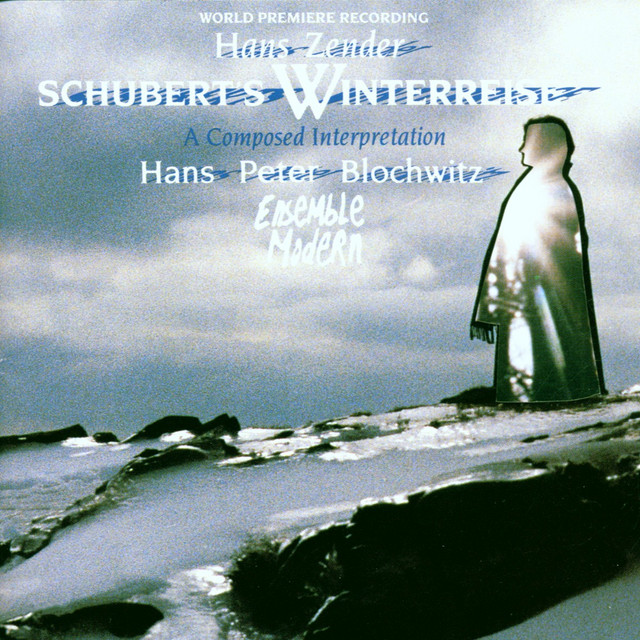
Cover of Hans Zender: Schuberts Winterreise — A Composed Interpretation
CLASSIC / REIMAGINED

Zender · Schuberts Winterreise

Schubert’s Winterreise is one of the supreme achievements of the Lied tradition, and Zender does not simply orchestrate it: he composes the act of interpretation itself. He stretches and interrupts Schubert, refracting the familiar through accordion, saxophone, percussion, wind machines and sudden changes of distance and colour. The point is not to replace the original, but to make one of music history’s greatest Lied cycles strange again—to hear its loneliness, memory and wandering through modern ears.

Recording details ↗
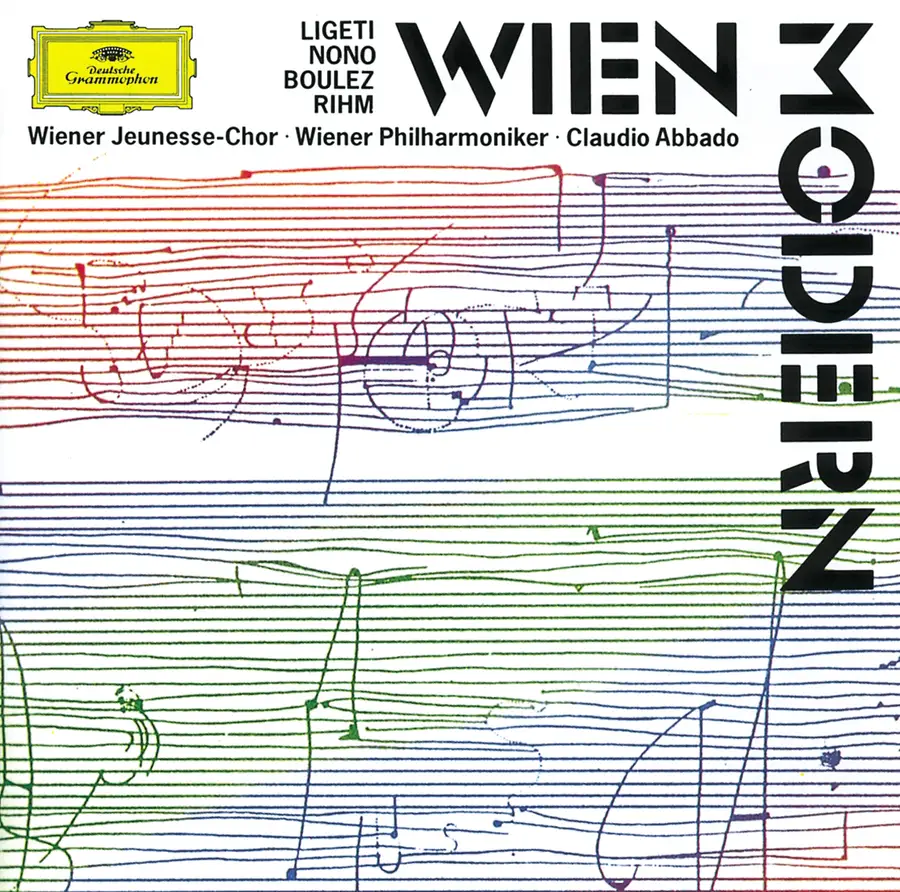
Cover of Wien Modern conducted by Claudio Abbado
FESTIVAL / PUBLIC LIFE

Abbado · Wien Modern

I do not find Abbado equally persuasive in every corner of the traditional canon; his importance to modern music, however, is difficult to dispute. He called performing contemporary music “a duty”, opened La Scala to Boulez, Stockhausen, Nono, Berio and Maderna, and later founded Wien Modern. This series is therefore more than a sampler: it documents new music entering the centre of public concert life.

Deutsche Grammophon ↗
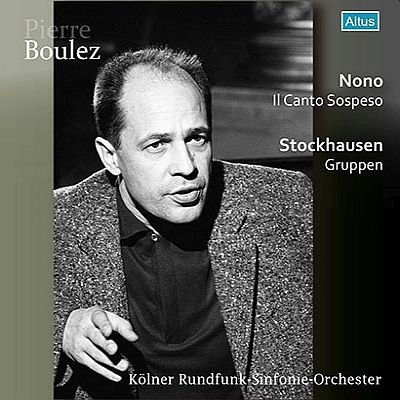
Cover of ALTUS ALT346: Nono Il canto sospeso and Stockhausen Gruppen
DOCUMENT / NETWORK

ALTUS ALT346 · Vienna 1959

Nono’s Il canto sospeso sits beside Stockhausen’s Gruppen, with Stockhausen, Maderna and Boulez reunited as its three conductors one year after the 1958 premiere. The disc is less a survey than a historical network caught alive: composers conducting one another, alliances and arguments not yet fossilised into music history. A group portrait of the post-war avant-garde while it was still happening.

ALT346 record details ↗

05 · THE SAME EAR, A DIFFERENT OBJECT

A recording also has an inside.

Performance, room, microphone, carrier and transfer history are folded into the signal. The question “what is the sound?” therefore continues beyond composition.

HISTORICAL CASEA Beautiful Error

Three transfers of Furtwängler’s 1944 Eroica; one performance, several afterlives.

Open case study ↗

06 · SOURCE NOTES

What supports the route.

Official archives, work records, performer or publisher pages, and the record pages actually used above. Interpretive sentences remain this site’s own.